
High on Cocaethylene
The secret drug created when coke and booze collide

“Whatever that drug is, when you mix cocaine and alcohol, that’s my drug.’”
This comment was loosely tossed off during one of many conversations I’ve had with men about cocaine in the last year. The speaker wanted to highlight the bullish pleasures of booze and coke – an age-old narcotic pairing, vilified as it is venerated. But they didn’t know that these two pals, when combined, do form a substance of their own.
It’s called cocaethylene and remains a ghost at the psychoactive feast. It’s the only known example where co-use of two drugs produces a new chemical with unique pharmacology and effects, yet remains wildly under-researched. When you consider that – as MDMA was to Generation X and ketamine is to Gen Z – coke is surely UK millennials’ definitive illicit drug, this discrepancy is dangerous: especially with cocaine-related deaths rising for 13 consecutive years.
But what actually is this narcotic interloper, used unwittingly by millions of people worldwide? And when we were all high on lines and wines before going deep at the afters, was it cocaethylene all along?
Some cocaethylene with your meal, Ma’am?
Alcohol and cocaine have been through a number of image volte-faces down the decades: from 1970s Laurel Canyon rockstars sniffing up their royalties at the Chateau Mormont to the 21st-century sesh habitué, twitching at birdsong through the ringpull of a Red Stripe can.
But the mix has a salubrious past. In 1863, the French chemist Angelo Mariani developed a tonic called Vin Mariani. It contained Bordeaux wine and coca leaves – the latter have been chewed by people in the Andes for millennia – with the alcohol’s ethanol functioning as a solvent, extracting the energising cocaine from the coca leaves.
It became famed for its invigorating effects and found transcontinental acclaim from a cross-stitch of luminaries: Queen Victoria, multiple Popes and European sports associations where it was considered the ‘Wine of Athletes’. Mariani never shared the recipe so Vin Mariani effectively died alongside him in 1914 but not before inspiring a culture of energising tonics, most notably ‘Pemberton’s French Wine Coca’. This evolved into Coca-Cola which nowadays uses decocainised coca leaf extract.
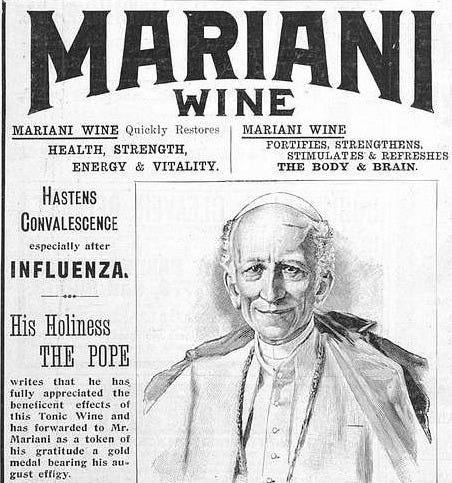
A 2024 paper analysing the contents of a Vin Mariani bottle found cocaethylene but the point of including this story is to show that – despite the stigma often attached to alcohol and cocaine, especially in the eyeroll age of Cali sobriety – there is deep historical precedent for humans to seek the psychopharmacological pep that ethanol and coca provide. Maybe, in the hyper-capitalist age, with its infinite drain on our time and attention, it’s even more appealing.
“This combination provides you with vitality and I think vitality is something that many of us lack in our daily lives because we’re over-consumed by information, exhausted with the things modern society brings to us,” says Dr Rayyan Zafar, neuropsychopharmacologist at the Centre for Psychedelic Research and Neuropsychopharmacology at Imperial College London, as well as a senior researcher with Drug Science.
“A little bit of alcohol calms down your overactive, fried brain. But then you get sleepy and want to stay out so you need a stimulant. It’s a response to the world we live in.”
Rayyan refers to the psychopharmacological state called “sedated stimulation” which has been repeated across the annals of psychoactive history: from the speedball (heroin and amphetamine or cocaine) to the Espresso Martini (alcohol and caffeine). In coke and booze’s case, it ascended to cultural ubiquity in the 2000s era of indie sleaze and All Bar Ones, with 2009 the record year for cocaine use in England and Wales.
Powder cocaine use amongst 16-24 year-olds in England and Wales has actually dived by 63% since 2018/19, according to government statistics. The older cohort, which covers 16-59 year-olds, has dropped 28% in that time, meaning the two age groups are now virtually on par. Traditionally, younger people reported cocaine use at least double the rate of older adults. Still, coke remains part of the UK’s social architecture – aided by reduced price, soaring strength and 24/7 access, particularly in urban areas.
This sedated stimulation is also still part of many working environments with Sally Baker, a London-based therapist specialising in anxiety and compulsive behaviour among high-functioning people, telling me previously that many of her clients “use booze and drugs as a reward for their high-achieving lifestyles while compartmentalising their drug use as a way of coping.”

And while it tends to be cocaine and/or alcohol that end up in the crosshairs of the media or public health, maybe we’re looking in the wrong place.
“When we actually talk about cocaine addiction – or when we talk about cocaine deaths, what we’re actually talking about is cocaethylene addiction and cocaethylene deaths,” says Rayyan. “It’s a secret, overlooked addiction. It’s not being talked about enough.”
Pathways to a chemical ghost
“I like coke because it keeps me going on a night out. If I’m just drinking I end up tired and wanting to go home,” says Jared, describing his cocaine-taking ritual.
This reflection is borne out in research finding most coke users also drink alcohol, calming jitters surrounding the Zone 3 adjacent heart rate it invokes. “I do not know a single person that’s ever taken coke sober,” adds Tom Usher, a journalist from London.
So how does it lead to cocaethylene?
When cocaine and ethanol (alcohol) are processed by the body they eventually reach the liver. Whilst there, a process called transesterification creates cocaethylene. Now, instead of your body just processing the cocaine and ethanol, each with their own physiological and neurological effects, there’s a third. The ghost. But rather than staying quiet, it makes a racket.
Cocaine is a fairly fleeting drug, with a half-life (the time it takes for half the drug to be processed) of around an hour. With cocaethylene present, this typically doubles.
So all those things one might associate with doing coke – most notably the clattering heartbeat but also the ego-boosting euphoria that may or may not result in you demonstrating your plank technique to a kitchen full of bewildered friends puffing Lost Mary vapes – endure longer.
1991 research published in the Journal of Neurochemistry suggested that cocaethylene may have dopamine-enhancing effects of its own. Rayyan Zafar says this could help explain why the combination may be distinctively habit-forming, with cocaethylene seemingly adept at blocking dopamine reuptake – leaving more fizzing in the brain’s reward pathways – which may make it more reinforcing than either cocaine or alcohol alone.

And then there’s the cardiovascular strain, around which there is more robust evidence. A 2024 meta-analysis published in the Journal of Clinical Medicine stated that, despite some inconsistencies, “it is concluded that the co-use of cocaine and alcohol poses an additional risk of cardiovascular fatalities compared to the use of cocaine alone.” The risk of a sudden death, it found, may be 18 to 25 times more likely.
Rayyan also points to atherosclerosis, where fatty deposits slowly build up in your arteries. This can eventually lead to strokes or embolisms. Alongside other lifestyle factors like diet and exercise, alcohol is a major contributor, but cocaine – which will be lasting longer thanks to this psychoactive blend – can supercharge the process: “it speeds up your heart rate, so you’ve got a higher velocity of blood and more of these fatty deposits,” Rayyan says.
Speaking truth to data
Note: This section discusses suicide and suicidal thoughts.
“I’ve never taken cocaine. My interest is just saving lives. I want people to survive.”
Maggie is a woman for whom an idiom like “force of nature” seems designed – yet inadequate. She is founder of the Co-Alc Alliance, a dedicated ‘Programme’ within the Jacob Abraham Foundation comprising organisations founded by bereaved parents of young people who’ve taken their lives during the comedown of taking powder cocaine and drinking alcohol.
Maggie (”Mags, Mag, even Madge – from my Madonna obsession – or Maggo”), a Samaritan, tells WAYO that “we have a lot of responsibility to look after people who don’t have the skills and understanding of looking after themselves during a comedown.”
She has been the root from which a small body of work into the links between cocaethylene and suicidality has grown, coming out of the University of South Wales, nearby to her home county of Rhondda.

First was a systematic review which declared an “urgent need” for more comprehensive research into cocaethylene. Maggie, who wrote her first letter to the Welsh government in 2020, raised the funds for this work through donations and grants. It helped lead to another paper, of which Drug Science was one amongst a number of partners including Kings College, London: home of the National Programme of Substance Use Mortality (NPSUM).
NPSUM analysed coronial reports from 147 people with cocaine and alcohol present in toxicology reports who died by suicide between 2007 and 2023. The cohort was predominantly male (72.4%), aged 25–45, overrepresented in the most deprived socio-economic strata with over half having been diagnosed with mental health conditions. The authors suggested that cocaethylene may act as a “biochemical marker” for particularly high-risk substance use related to co-occurring mental health conditions, and elevated suicide risk.
The NPSUM team is led by Dr Caroline Copeland. They published research into how English and Welsh drug deaths are recorded and Caroline says that “people dying from cocaine and alcohol are not being recorded properly. The way these deaths are counted is systematically inaccurate”.
This is not exclusive to cocaine and alcohol but more down to the framework by which coroners report deaths – particularly by suicide, which can be open to interpretation. Matters also become ambiguous when multiple substances are involved, with deaths sometimes recorded as “multi-drug toxicity” rather than attributed to individual drugs.
Caroline says there are also specific reasons why cocaine or alcohol may not appear in official suicide records.
“The drug needs to be specifically named to be counted but, in suicides, there are potentially two barriers to a coroner doing this. They may not want to name a drug on the Record of Inquest [the coroner version of a death certificate] as they don’t want to advertise means of suicide,” Caroline says, caveating that in the age of the internet/Reddit, this may be somewhat limited in impact. “Secondly, if someone is using alcohol and cocaine prior to dying by suicide due to other means, e.g. hanging, then drugs and alcohol may not feature as a cause at all – if the physiological cause is asphyxiation.”
While Caroline tells WAYO that it would be hard to state that cocaethylene itself was to blame for the suicides, with each person living under a unique set of circumstances, she says that there “is a funding and information gap for people dying as a result of cocaine and alcohol use.”
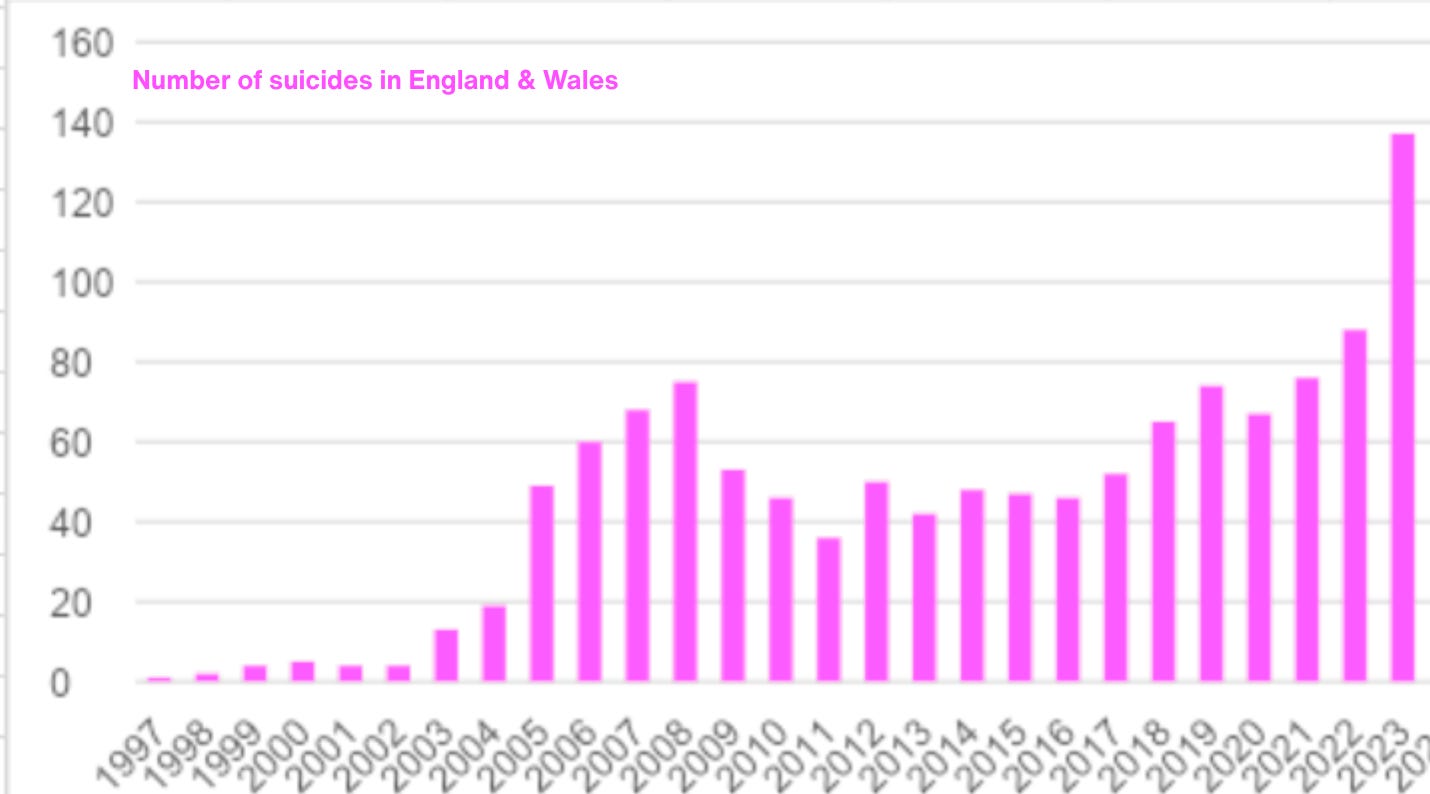
2,482 cocaine-related deaths were missed from the Office of National Statistics data between 2011 and 2022 (though this number also includes crack as the two are indistinguishable on toxicology reports). To corroborate the general picture, she pulls up these stats from 1997 to 2023 in which suicides deemed likely to be from powder cocaine use increased from 1 to 137 people annually.
Alongside spearheading the drive for this research and making an as-yet unreleased documentary on cocaethylene, Maggie organised a 2023 conference alongside the Central Club podcast. One of its most powerful panels comprised three men with lived experience of cocaine and alcohol-induced suicidality.
This included Gregor, a barber living in Brighton. He tells WAYO that despite his experience, “there have been many times when, if dosed correctly, it [taking cocaine] has been such an intimate moment with a partner or a best friend.”
He’s keen to not demonise the substance and says that he’s not convinced that cocaethylene causes suicidal thoughts in and of itself. “There is a big part missing in our rituals,” he suggests, however. “Everyone goes out together. But what about the bit afterwards? You can’t just go home and suffer by yourself all the time. I think it’s important that people think about the next day.”
2022 research has found that impulsive behaviour is strongly associated with suicide risk, with impulsive people more liable to use drugs in the first place. Both cocaine and alcohol can also impair judgement and increase impulsive urges. This may also be compounded by the sleep deprivation often following cocaine use which may help instigate a transient psychosis. To negate the dangers of these, Maggie reiterates, time and again, a message of sharing the comedown: “One of the most protective factors is being with somebody the next day,” she says.
She thinks of cocaine as “a biological accelerant that enhances your impulsivity but also your negative thoughts,” and says that “a predominance of people I’ve come into contact with have either got ADHD or undiagnosed ADHD, and are possibly self-medicating.”
A 2022 meta-analysis in Alcohol and Drug Dependence found that 23.1% of people with a substance use disorder also had ADHD (compared with 4.7% in the general UK population). Professor Adam Winstock, consultant addiction psychiatrist and founder of the Global Drug Survey, describes ADHD as “probably one of the biggest misdiagnoses amongst people that are dependent” and estimates that around 30% of people dependent on cocaine have the condition. One possible explanation is that users experience a paradoxical response to the drug, with cocaine temporarily calming dopamine-seeking behaviours in a way that resembles prescribed ADHD meds.
The cocaethylene paradox
Across the cocaethylene literature that exists you’ll find plethoras of caveats and grey areas.
Guy Jones, a senior chemist at drug checking charity The Loop thinks that cocaethylene’s role itself is over-exaggerated. “It plays a negligible role in the pharmacology of consuming alcohol and cocaine at the same time,” Guy says. “It’s simply not produced in any meaningful amount in the body. It’s not wrong to say that the risks and effects of the combination are different but it’s wrong to say cocaethylene is the reason why.”
He points to a 2015 letter from the Advisory Council on the Misuse of Drugs (ACMD) to the UK government that says the risks combining cocaine and ethanol is “thought to be due to alcohol decreasing the metabolism of cocaine and, therefore, increasing [...] cocaine concentrations with only a minimal (if any) contribution to an increased risk from the formation of cocaethylene”.
Guy says it is “one of the most understandable misunderstandings in the history of drugs myths” but also that it’s a moot point as “each drug allows more of the other to be consumed” and the harms persist because of this.
I asked Rayyan about this and, while acknowledging the lack of biochemical evidence, he said that, “if you’re slowing down the metabolism of another drug, I’d argue you are creating an environment where another third drug can interact for longer – therefore increasing the amount of that substance.” He also says that there’s a lot of preclinical literature with cocaethylene administered to animals and found it’s more harmful, and that semantics aren’t what’s important at the current time. “It’s on every street corner. I wouldn’t call it the biggest drug myth around. We shouldn’t try to undermine its effects.”
The future of cocaethylene
We are currently in a gilded age for cocaine strength. European drug-checking data found 55% of tested samples at 80%+ in early 2023, falling to 46% in early 2024.
The average UK strength was just 20% in 2009 – ironically the height of its Converse-kicking popularity – but a recent investigation by The Independent from the UK’s Cheltenham race course found two-thirds of coke samples swabbed in toilets to be 85%+. On Telegram, you can now pick up a gram of premium product sold as “fresh from the brick” for the price of a bag of low-tier bash on the street.
But what effect does this new culture of higher strength coke have on cocaethylene?
“Higher purity cocaine likely lengthens and intensifies the stimulant effects,” Rayyan says, adding that “because cocaethylene is formed when cocaine is metabolised in the presence of ethanol, higher strength would likely lead to more of that metabolite being created – leading to more cocaethylene in the bloodstream.”
However, for any enterprising purveyor of cheap cocaine thinking of saying that “cheaper is safer” to clients, lower grade cocaine will be cut with adulterants – like the deworming agent levamisole, which bring their own suite of negative effects.
There’s little research into whether stronger alcoholic drinks affect cocaethylene production, though Rayyan theorises that, if you were drinking spirits, you might consume ethanol faster than if you were drinking lower-strength drinks like beer or wine – potentially leading to greater concentrations of cocaethylene.

As it stands, there isn’t a robust pathway for helping people and no specific medications for stimulant addiction. Certainly not for cocaethylene. “There are just not enough public health resources or even specialist treatments for this,” says Rayyan, pointing out that we need to be more adept at focusing on powder cocaine addiction – rather than bundling it together with its fiercely addictive cousin, crack.
Change can come through better research, non-moralising political will and dissemination of information by people like Maggie Cee’s Co-Alc Alliance. Interestingly, some Phase 1 research into psilocybin for cocaine addiction did yield positive results – though this is some way off, even with Donald Trump’s Joe Rogan-inspired appetite for psychedelic law reform.
Maybe a solution will come from the lab. Rayyan suggests that “perhaps medicinal chemists and biochemists should develop a legal cocaethylene derivative that lacks the cardiotoxicity and highly addictive potential, while retaining some of the positive behavioural and psychological effects that people find rewarding.”
In the meantime, people, mostly but not exclusively men, will tragically die seeking cocaethylene’s euphoria, escape, oblivion or perhaps just respite from the grind.
During our long chat with Gregor, he tells a story about an older friend of his who describes taking cocaine as like being on holiday. “I think that’s such a good analogy,” he says. “It can give you that same feeling.”
Like all holidays, though, eventually you’ve got to get back on the plane.
Thanks to Drug Science for their collaboration on this post. Follow their new Substack.
SOME USEFUL LINKS
Samaritans
David Hillier interview on Drug Science podcast – “Cocaine and alcohol'‘
Drug Science ‘Alcohol’ information page
Drug Science ‘Cocaine’ information page
Co-Alc Alliance
Mostly clean these days, but for certain hallucinogens, I find your work incredibly useful. It helps bring shape, colour and a little forensic order to a drug-laden past which, if I squint, looks like a mass pile-up.
Great reporting on a little- considered issue. The suicidality impact is so crucial. Keep up the writing on all fronts.